
Luxury African Safaris, Planned by an Advisor Who Has Been There
Love to Travel plans luxury African safaris for travelers who want unforgettable wildlife, expert guides and real comfort. I'm Kim Cook, and I've been planning travel from Overland Park, Kansas, since 1993. In November 2026 I took my own first safari through South Africa, so I recommend lodges, flights and guides I've experienced myself. There are never any planning fees.
Why plan your safari with me
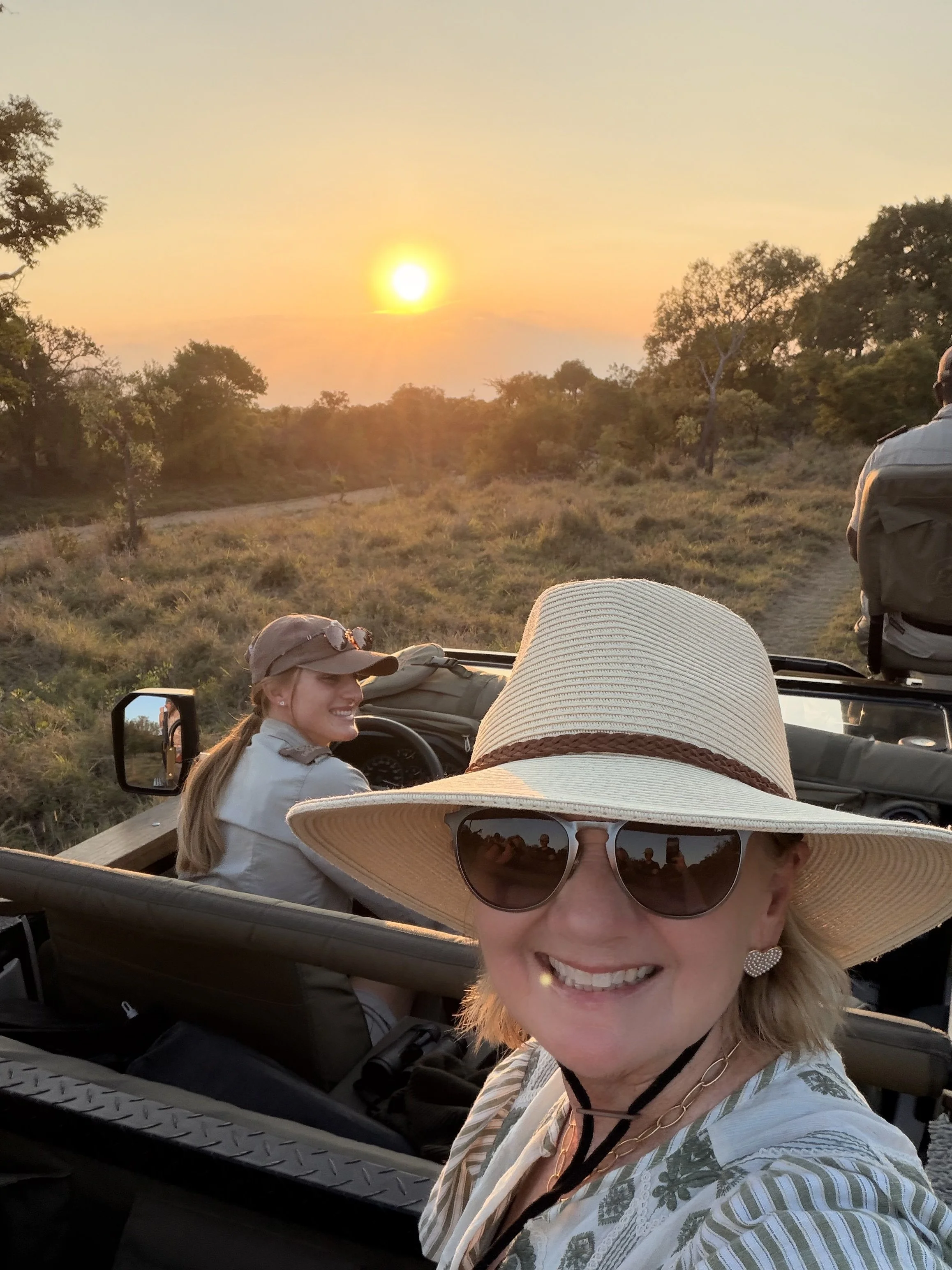
I've been there. I've stayed at the lodges I recommend, flown the small planes and been on the game drives.
I know first-timers' worries. I was nervous about the small charter flight and about packing light, so I'll walk you through both.
The guide makes the safari. The right lodge means a guide who explains what you're seeing, not just points at it.
Safari doesn't mean roughing it. Private plunge pools, beautiful suites and incredible food are all part of it.
A trusted partner on the ground. I work with Live Life Safaris, founded by Clint Saint, for expert planning across Africa.
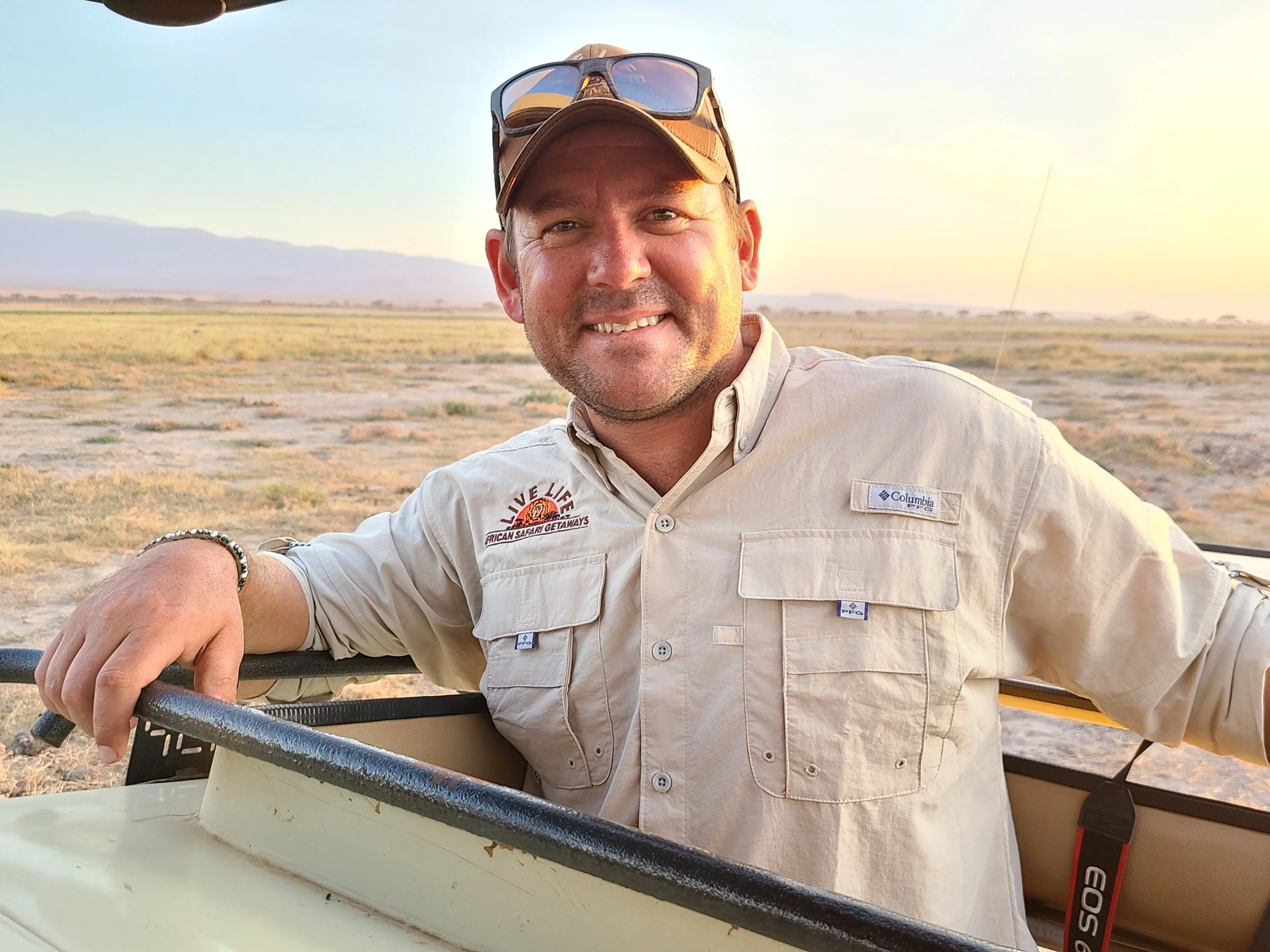
My partner on the ground: Clint Saint and Live Life Safaris
The best safaris are planned by people who know Africa from the inside. That's why I partner with Live Life Safaris, founded by Clint Saint. https://www.livelifesafaris.com/
Clint grew up in a close-knit community outside Durban, South Africa, and started Live Life Safaris in 2010 as a family business. The name honors his father, who always encouraged his family to "live life." After his father passed away far too soon, those words became the family's guiding philosophy: you only have one life, so make it count.
You feel that spirit in every Live Life safari. Their team, many of whom live and work in South Africa, treat each other like family, and they treat their guests the same way. For them, Africa isn't a destination. It's home, and they love sharing it.
Why I trust Live Life Safaris with my clients
I've traveled with them myself. My own first safari was with Live Life Safaris, so I've experienced their planning, their partners and their care firsthand.
They're local. Born and raised in South Africa, their team has deep relationships with the lodges, guides and pilots, which means the best rooms, smooth transfers and insider touches, like the skip-the-line pass we had for the Table Mountain cableway.
Support on the ground. While you're in Africa, a local team is there if anything changes, from a delayed flight to a change in plans.
Seamless from start to finish. I'm your personal advisor at home, and Live Life Safaris takes care of every detail once you land.
How we work together for you
You work with me from your first question to your welcome home. I learn what matters to you, match you to the right lodges and handle your booking. Clint's team brings local expertise and is right there in Africa throughout your trip. You get a personal advisor and a family on the ground, with no planning fees.
-
There's no bad time to go on safari in South Africa. Each season offers something different, and the best time for you depends on what you most want to see and experience.
Dry season (May to October): best for classic game viewing
This is the most popular time to go. With little rain, the bush thins out and animals gather around rivers and waterholes, which makes them easier to spot. Days are sunny and pleasant, but early mornings and evenings can be surprisingly cold, so lodges hand out blankets and hot water bottles on game drives. Malaria risk is lower in the drier months. Because this is peak season, the best lodges book up 9 to 12 months ahead, especially July through October.Green season (November to April): best for babies, birds and value
After the summer rains, the bush turns lush and green. This is baby season: impala, wildebeest and other young animals are born, which brings predators out too. Birdwatching is at its best with migratory birds arriving, and many lodges offer lower green-season rates. Expect warmer days and the chance of an afternoon thunderstorm, which usually passes quickly and leaves the bush smelling incredible.My experience
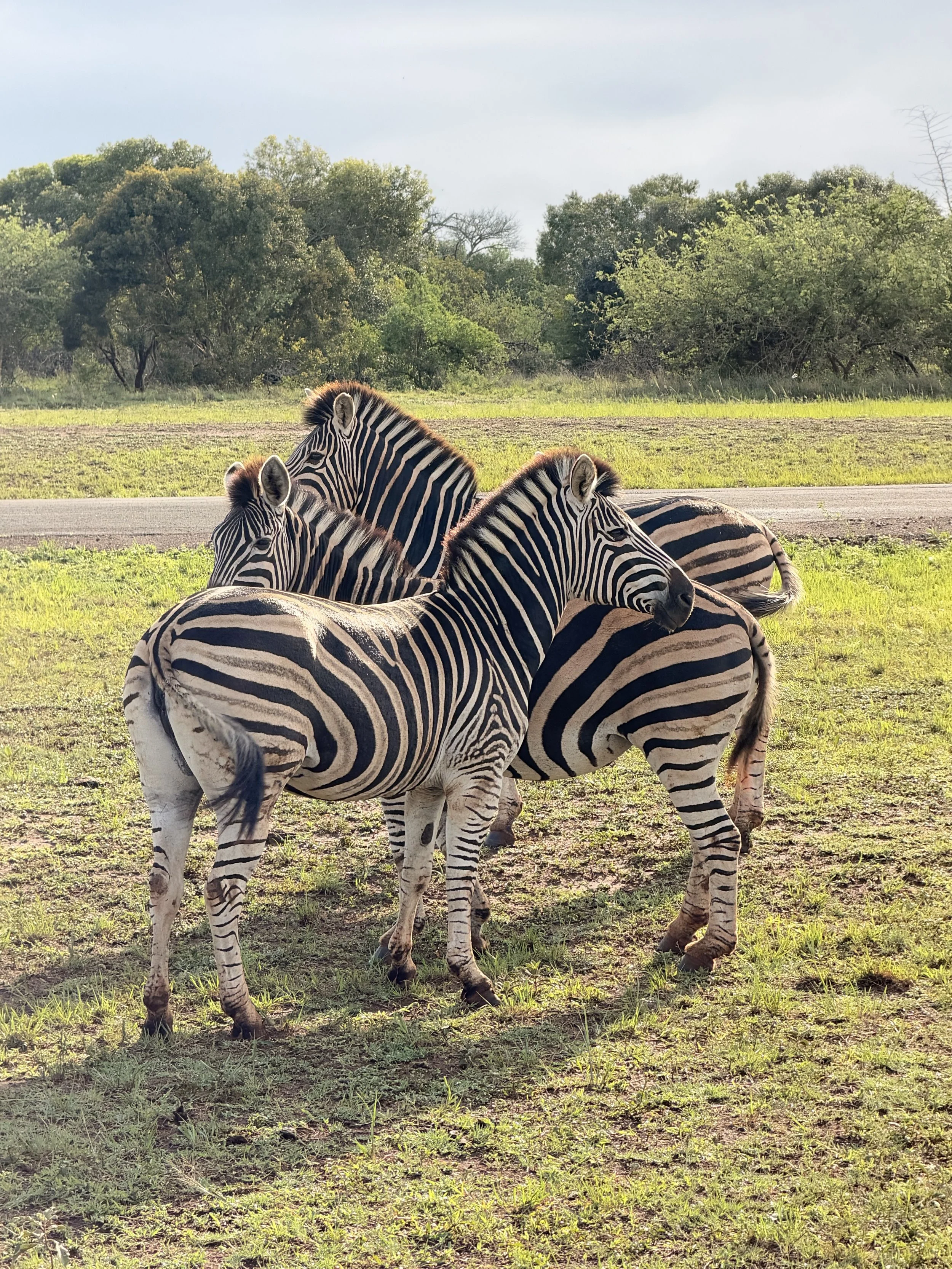
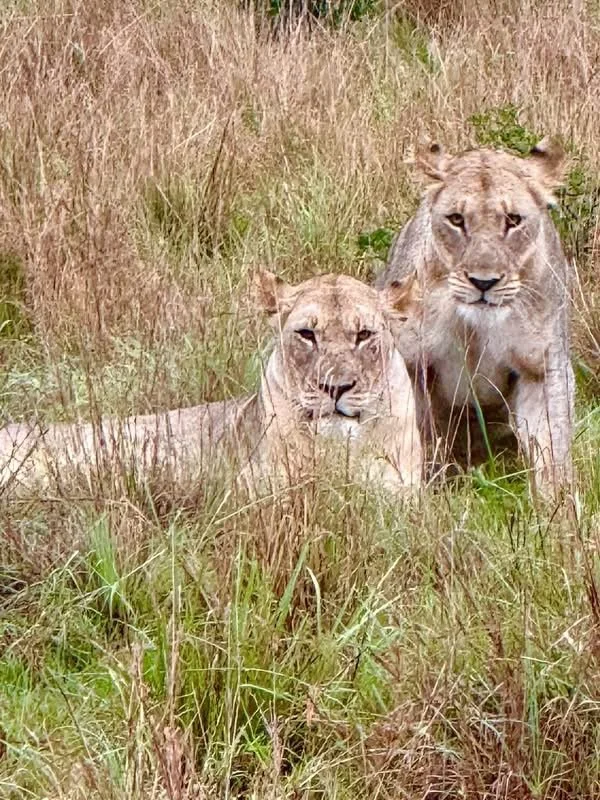
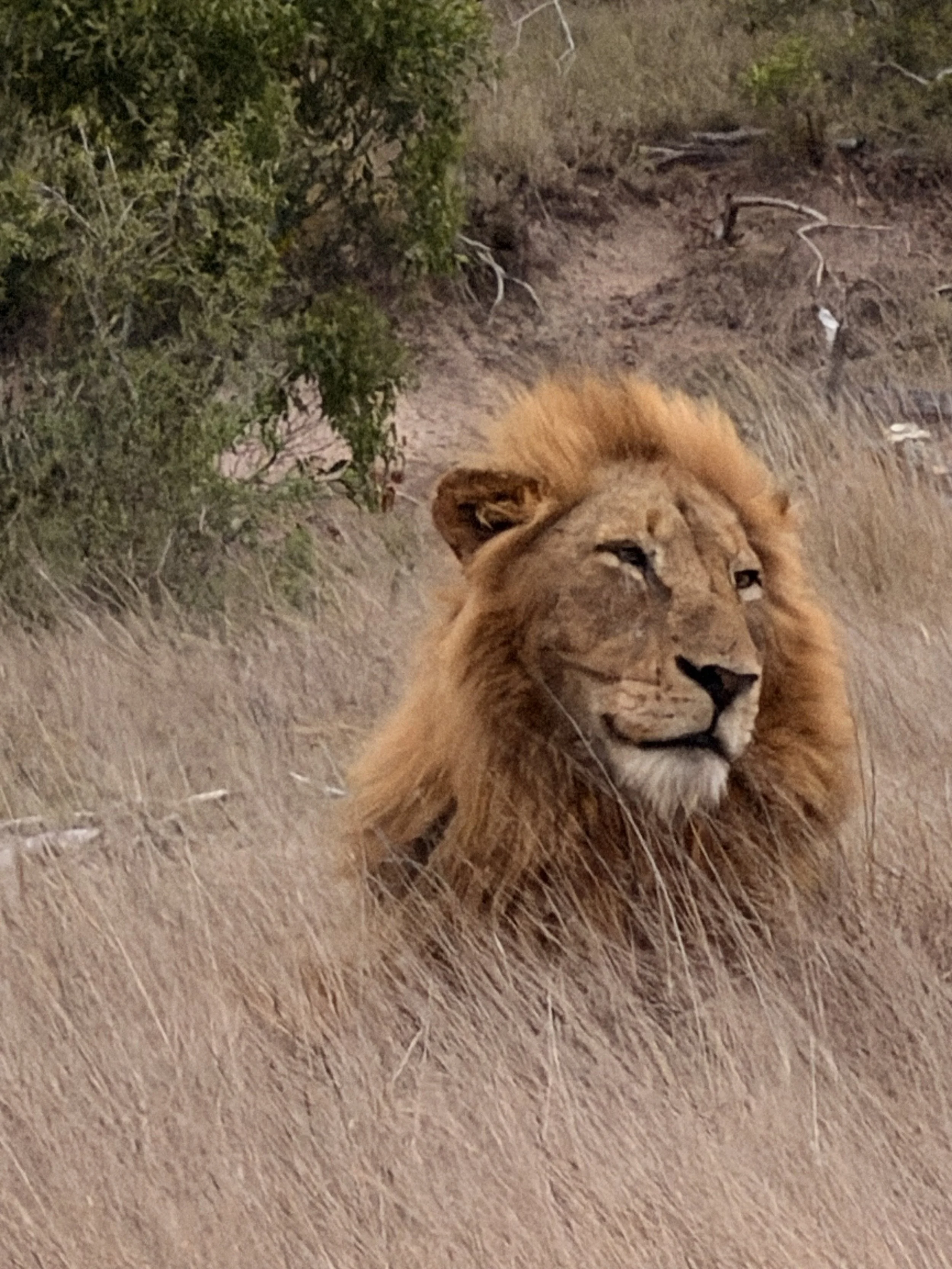
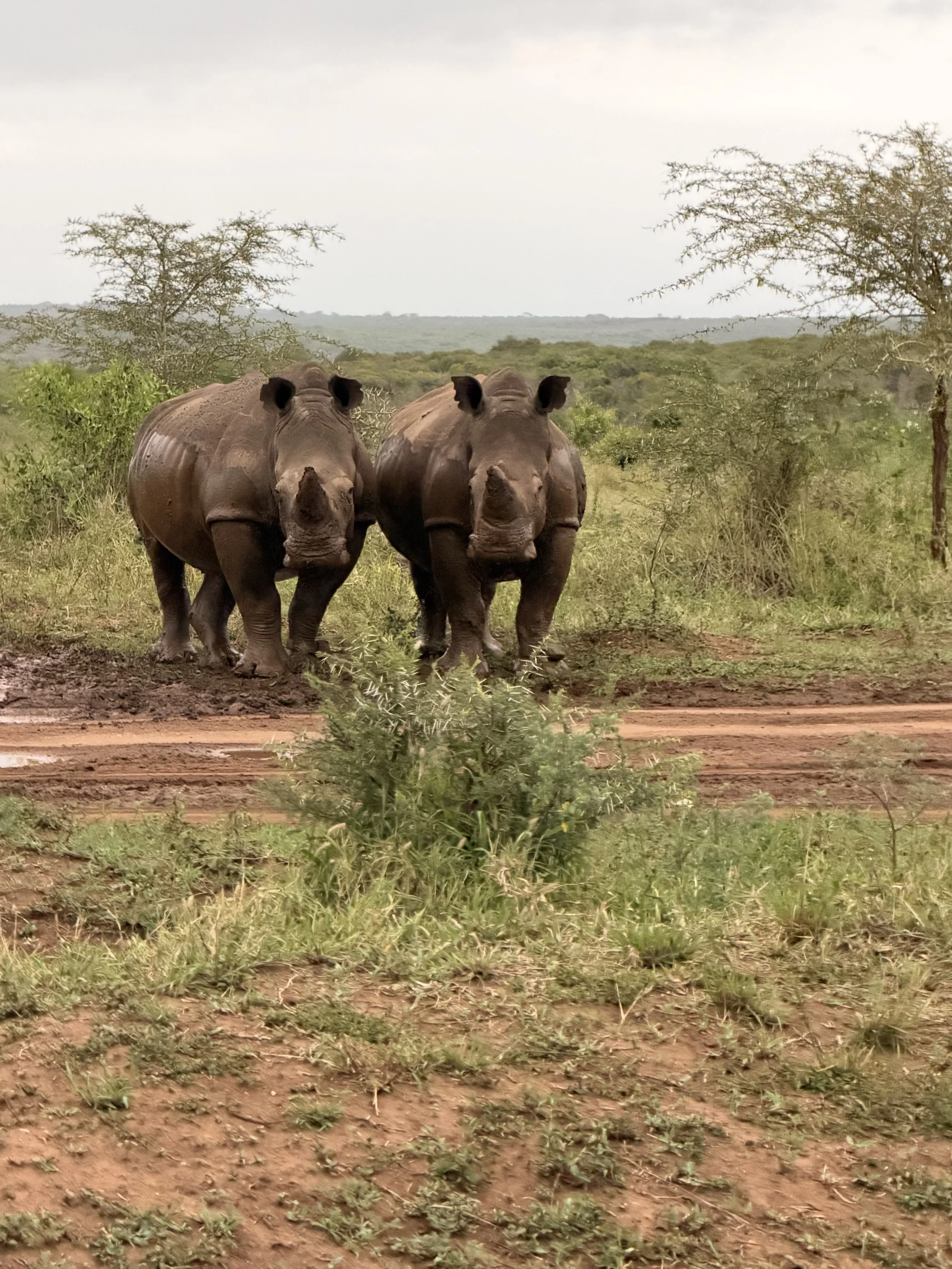
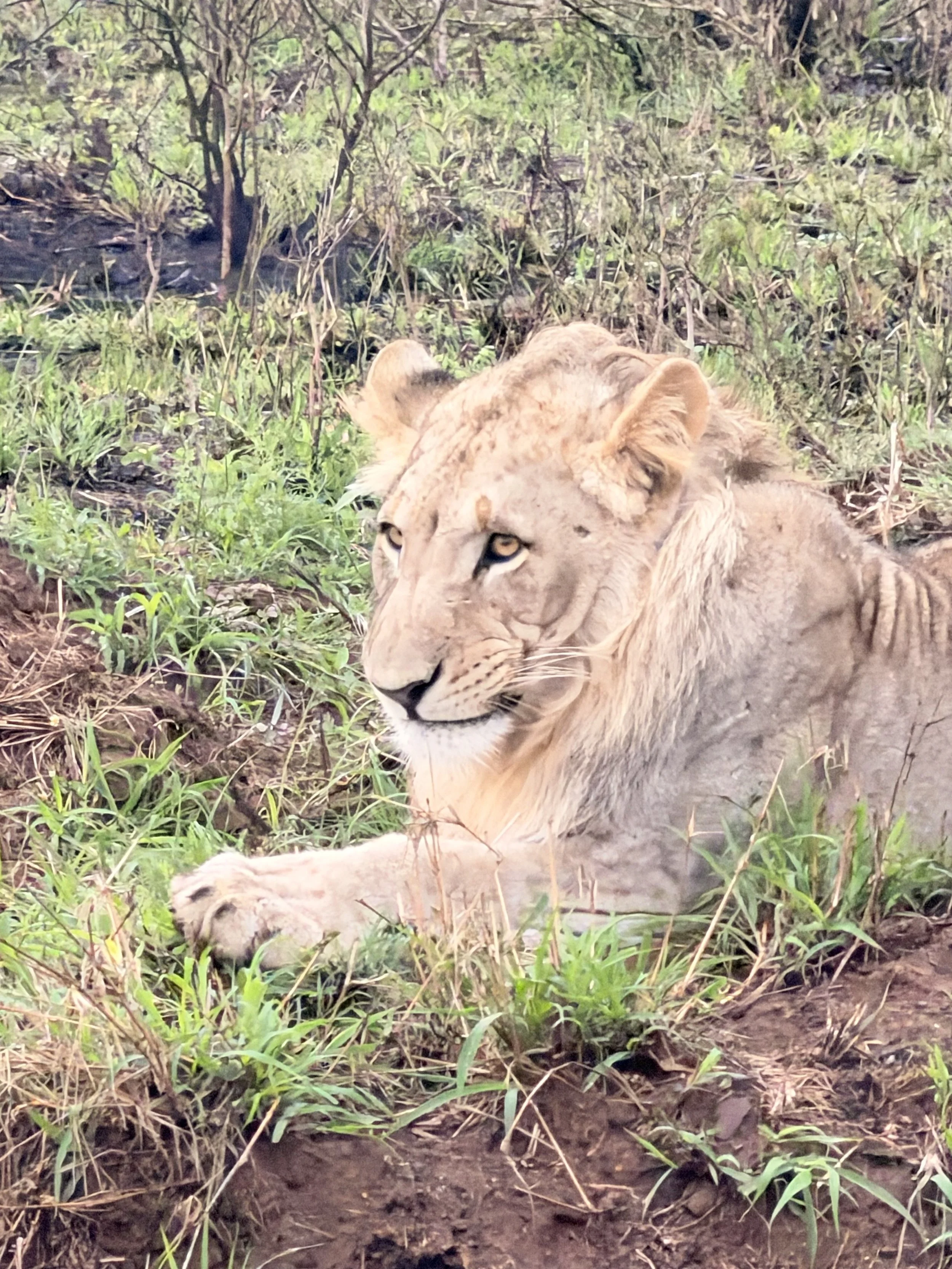
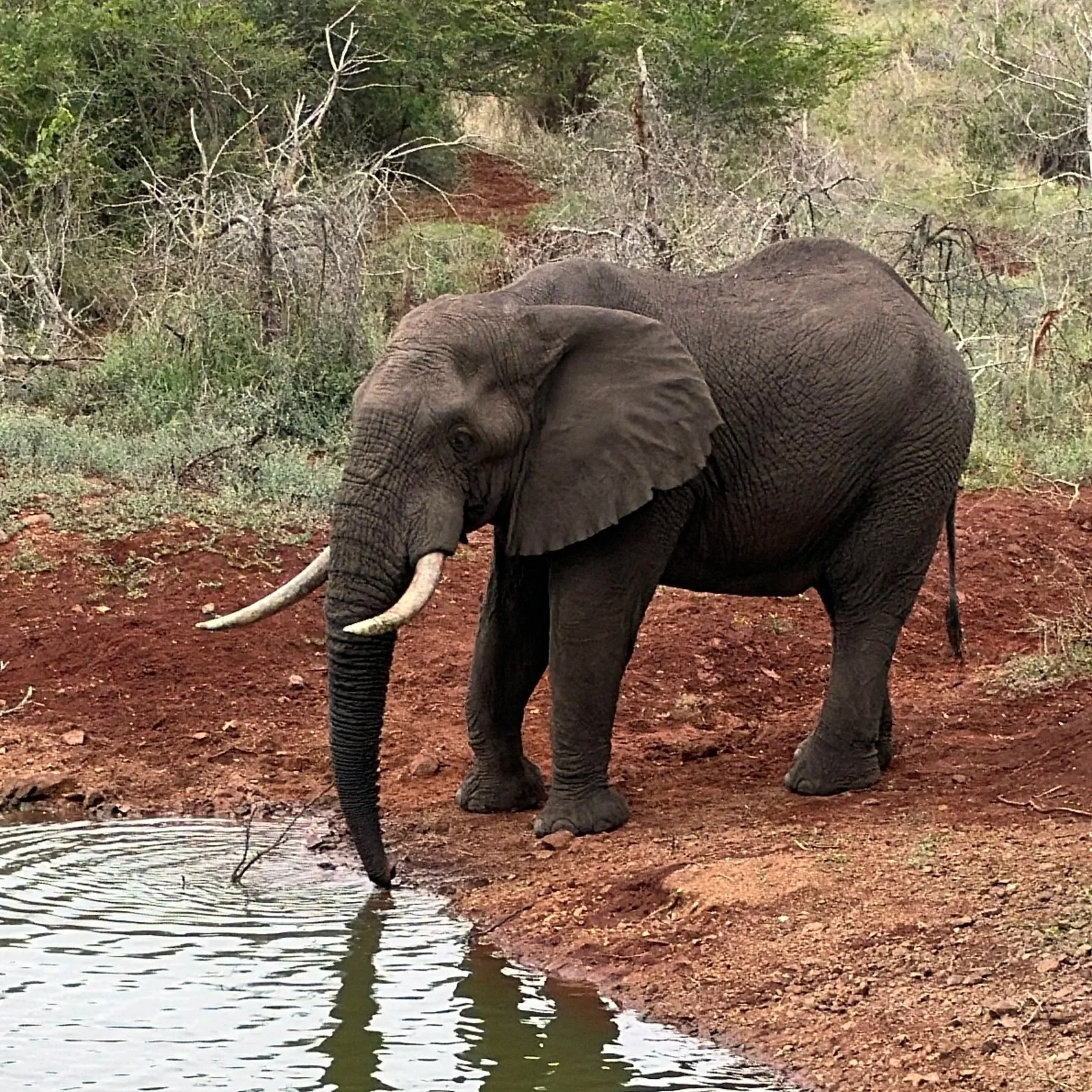
I traveled in November, at the start of the green season. Yes, we had a rainy morning game drive, complete with ponchos. And we still saw lions, cheetah, elephants, rhinos and so much more. The landscape was green and beautiful, and the baby animals were a highlight I'll never forget.Going beyond South Africa?
Timing matters even more in other countries. The Great Migration river crossings in Kenya and Tanzania usually peak from about July to October, and Botswana's Okavango Delta floods are at their fullest in the middle of the year. I'll help you match your dates to the right destination. -
For most travelers, 10 to 14 days in Africa is ideal. That gives you time to recover from the long flight, enjoy a city or Victoria Falls, and spend at least three nights at each safari lodge. Three nights means about five or six game drives, which gives the animals (and your guide) time to deliver those unforgettable moments.
Start with a soft landing
The flight from the U.S. is long, often 16 hours or more. I recommend starting with two or three nights in Cape Town before heading into the bush. You can rest, adjust to the time change, and enjoy Table Mountain, the penguins at Boulders Beach and the Cape Winelands. You arrive at your lodge refreshed and ready for those 5 a.m. wake-up calls.Three ways to shape your trip
Cape Town and two safari lodges (about 10 days)
3 nights Cape Town, 3 nights at the first safari lodge, 3 nights at a second lodge in a different reserve. This is the trip I took, and two reserves gave us different landscapes, different wildlife and different camp experiences.Cape Town, Victoria Falls and safari (12 to 14 days)
3 nights Cape Town, 2 to 3 nights in the Winelands, 2 nights at Victoria Falls, then 3 to 4 nights on safari. Victoria Falls is a short flight from Johannesburg and adds one of the world's great natural wonders, along with sunset cruises on the Zambezi River.Safari, a break, then safari again (12 to 14 days)
3 nights at a safari lodge, 2 to 3 nights relaxing in Cape Town or at a beach, then 3 nights at a second lodge. Game drives start early and are wonderfully full, so a break in the middle lets you rest and come back to the bush excited all over again.My advice
Don't try to squeeze too much in. The magic of safari happens when you slow down: lingering at a sighting, enjoying a sundowner, watching elephants from your deck. Tell me how much time you have, and I'll design the route that fits your pace. -
Yes. A safari with an experienced guide and tracker is very safe, and it was one of the things that surprised me most. Before my first safari, I wondered how safe it could really be to sit in an open vehicle a few feet from lions. Once I was there, I never felt nervous, even on night drives.
The reason is the people. Safari guides and trackers train for years and know these animals as individuals: their territories, their moods and their warning signs. They read body language we would never notice, like a flick of an ear, a change in posture or an alarm call from an antelope in the bush. They know when to move closer, when to wait quietly and when to give an animal space.
They also explained something that put me completely at ease. Animals like lions see the open vehicle as one large shape, not as people or prey, which is why they often walk right past without a second look. As long as everyone stays seated, keeps their arms inside and follows the guide's instructions, the animals stay relaxed.
Safety continues back at the lodge. In camps where wildlife can wander through, staff walk you to and from your suite after dark, and your guide is always in radio contact with the team. You quickly learn to trust their calm.
Within a day or two, "Is this safe?" turns into "What will we see next?" Choosing a lodge known for exceptional guides is one of the most important parts of planning your safari, and it's exactly what I focus on for my clients.
-
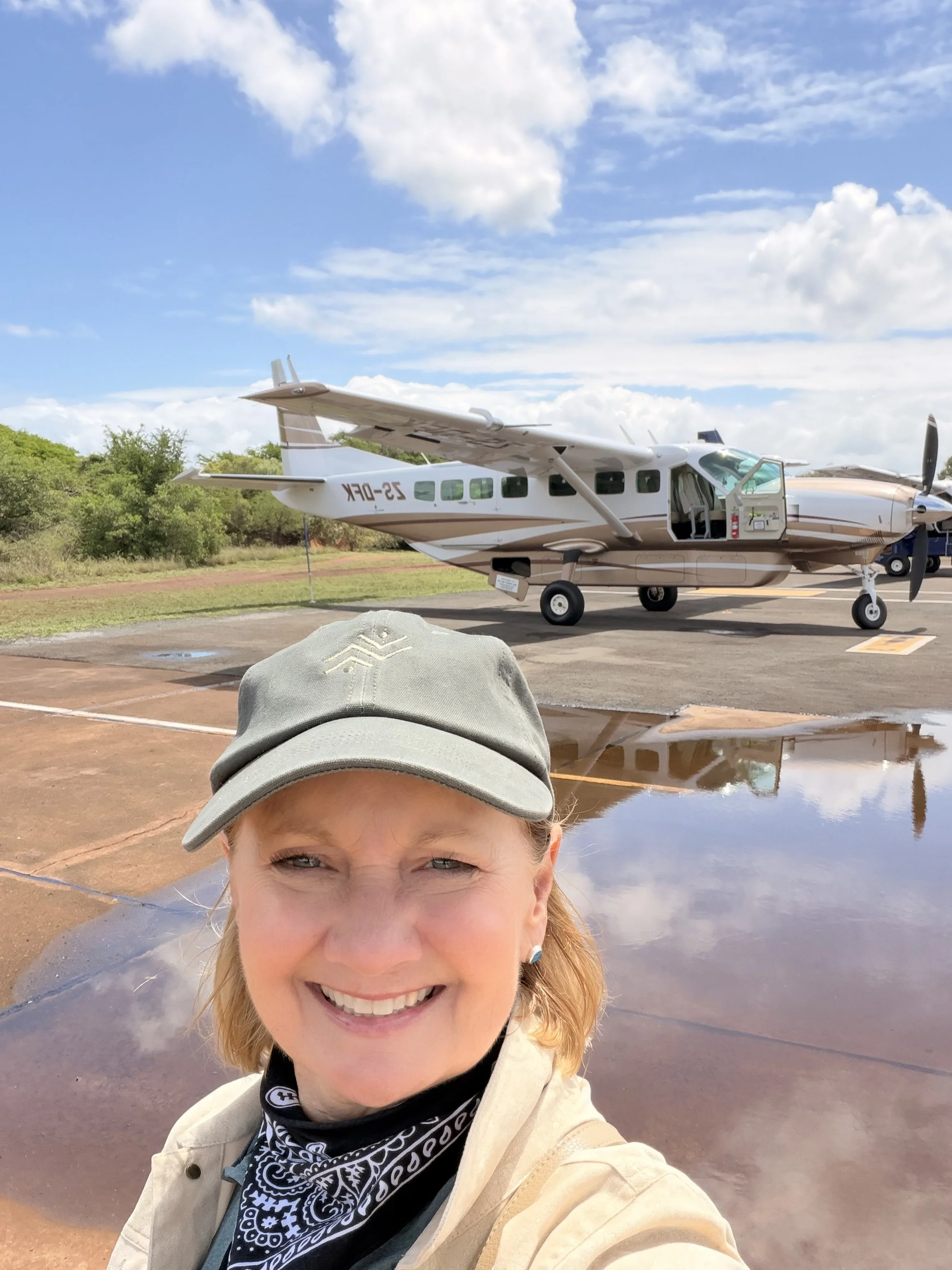
Most travelers fly between safari lodges on small charter planes that land right on the private game reserve's own airstrip. It's quick, scenic, and one of the most memorable parts of the trip.
The flight
These light aircraft usually seat about 6 to 12 passengers, and the views over the bush are incredible. I'll admit I was nervous about flying in a small plane before my trip. It turned out to be one of my favorite moments: smooth, safe and like a private sightseeing flight. Luggage is limited, usually about 44 lbs (20 kg) per person in a soft-sided bag, and I'll help you pack for it.Arriving in the bush
There's nothing like it. You touch down on a dirt airstrip in the middle of the bush, and your guide and tracker are waiting beside their Land Cruisers to welcome you by name. There's no terminal and no crowds, just you and the wild. When we landed at Sandringham, the team was there to greet us. Often your first game drive begins right there on the way to the lodge, and you may spot elephants or giraffes before you've even checked in.Prefer to stay on the ground?
Some lodges can also be reached by road with a private driver. That's how we traveled from Durban to Phinda. I'll recommend the best option for your route and comfort. -
Small safari planes have strict limits, usually about 44 lbs (20 kg) per person, including your carry-on, in a soft-sided duffel bag with no wheels or hard frame so it fits in the plane's small cargo space. It sounds tight, but it's very doable. I packed for 10 days within that limit, and as a self-confessed shoe girl, I got it down to just three pairs.
Why you need less than you think
Most safari lodges offer laundry service, often included in your stay, so you can rewear your favorite pieces. Lodges also provide toiletries, and safari dress is relaxed. Comfortable and practical beats dressy every time.My tips
Stick to neutral colors: khaki, olive, tan and soft brown blend into the bush. Skip bright white, which shows dust, and dark blue and black, which can attract tsetse flies in some areas.
Leave the camouflage at home: camo clothing is restricted in some African countries, including Zimbabwe and Zambia, so avoid it if you're adding Victoria Falls.
Pack in layers: early-morning and evening drives can be cold, even when the afternoon is hot.
Wear your bulkiest items on the plane: your heaviest shoes and jacket don't count toward your bag weight.
-
Yes! A safari is one of the most memorable trips a family can take together. Many luxury lodges welcome children with family suites, kids' programs and private game vehicles, so everyone gets a safari that fits their age and energy.
Age guidelines
Most lodges welcome children of all ages, but shared game drives usually start at age 6. Younger children can often join shorter drives, or go out with the family in a private vehicle. Some smaller camps are adults-only or set a higher minimum age, so I match you to lodges that welcome your children's ages.Kids' programs that make safari magic for children
&Beyond WILDchild (including Phinda): for children ages 3 to 12. Each child gets a backpack with a scrapbook and a gift like a compass or magnifying glass. Activities fit around family game drives and are led by rangers: tracking footprints, scavenger hunts, crafts and even making traditional bows and arrows. At Phinda Mountain Lodge, specially trained staff can watch the kids while parents enjoy a drive.
Sabi Sabi EleFun Centre at Bush Lodge: a dedicated kids' center for ages 4 to 12, designed by childcare professionals. Junior Trackers (4 to 8) and Junior Rangers (9 to 12) learn to read animal tracks, identify birds, make crafts and explore on nature walks, at no extra cost.
Teens: &Beyond's WILDchild Eco-Guide Challenge at Phinda is a hands-on conservation adventure for teenagers ages 14 to 18, traveling with a parent.
Sandringham: the main lodge includes an education center for younger guests, and the private villas are ideal for families.
Private vehicles: safari on your family's schedule
For families, I often recommend a private game vehicle with your own guide and tracker. Some family suites and private villas include one; at other lodges you can add one for an extra cost.Go at your pace: stay longer at the elephants, or head back when little ones get restless.
Flexible timing: shorter drives, later starts or a snack stop whenever you need it.
Younger children welcome: private drives are often the way kids under 6 can join a game drive.
Questions encouraged: your guide can tailor every drive to your children's interests.
Family-friendly rooms
Look for family suites, connecting rooms or private villas. They're limited, so book 12 months or more ahead for family trips.My advice
Choose a lodge that truly welcomes children, not one that just allows them, and consider a private vehicle. Then let the bush do the rest. Watching a child see their first elephant is something you'll never forget. -
For the best choice of lodges and dates, book 9 to 12 months ahead, and 12 to 18 months ahead for peak season, families or once-in-a-lifetime experiences. Safari lodges are small, so the best suites fill up long before most people start planning.
Why safaris book up so early
Unlike big resorts with hundreds of rooms, luxury safari camps are intimate. Many have only six to twelve suites. At Sandringham, for example, each of the two camps has just six suites. Once those are booked for your dates, there's no "next room down the hall."When to book
12 to 18 months ahead: peak dry season (July to October), the Great Migration in Kenya and Tanzania, gorilla trekking (permits are limited), and holiday travel over Christmas and New Year.
12+ months ahead: families and multigenerational groups. Family suites, connecting rooms and private villas are few and go first.
9 to 12 months ahead: most luxury safaris in South Africa, including shoulder months like May, June and November.
6 months or less: sometimes possible in the green season (December to April) or with flexible dates. It's worth asking, but expect fewer lodge choices.
Don't forget the flights
Airlines usually open seats about 11 months in advance. Booking early gives you the best fares and seat choices on the long flight. It matters even more if you want business class or plan to use points and miles.Booking early also gives you
First choice of the best suites, like ones with plunge pools or waterhole views
Time to build a smooth route with the right flights and transfers
Access to early-booking specials and stay-and-pay offers when lodges have them
Time to get excited, which is half the fun
Already have dates in mind?
Reach out as soon as you're dreaming about it. Even if you're not ready to book, I can check availability and hold options while you decide. -
IFor a luxury South African safari, plan on roughly $1,000 to $2,500 per person per night at the safari lodge. A 10- to 14-day trip that combines Cape Town and two safari lodges typically runs $10,000 to $30,000+ per person, not including international flights. The biggest factors are the lodges you choose, the time of year and how long you stay.
What's included
Safari lodge rates are all-inclusive. Your nightly rate typically covers your suite, all meals, two game drives a day with a guide and tracker, and many drinks. Some lodges even include laundry. That's why safari prices look high at first glance: you're paying for far more than a room.Safari lodge price ranges (per person, per night)
Luxury: about $650 to $1,050. Beautiful lodges, excellent guiding and great wildlife.
Premier luxury: about $1,200 to $2,200. Private plunge pools, top-tier service and prime locations.
Ultra-luxury: about $2,400 to $4,500+. The most exclusive lodges and suites in Africa.
Sample trip budgets (per person, not including international flights)
$10,000 to $15,000: Cape Town plus two luxury safari lodges, about 10 days.
$15,000 to $20,000: Cape Town, the Winelands and premier luxury lodges, or adding Victoria Falls.
$20,000 to $30,000+: ultra-luxury lodges, private vehicles or villas, and a longer stay.
What to budget on top
International flights: economy, premium economy or business class from the U.S.
Flights between lodges: small charter flights and transfers.
Conservation levies: small daily fees some reserves charge separately.
Gratuities for your guide, tracker and lodge staff.
Travel insurance, which I strongly recommend.
How to make your budget go further
Traveling in the green season (November to April) often means lower rates, and some lodges offer stay-and-pay specials, like a free fourth night. Mixing a premier lodge with a luxury lodge is another smart way to balance your splurge.Every safari I plan is custom, and there are never any planning fees. Tell me your dates and wish list, and I'll give you a personal quote.
-
For a luxury safari, especially a first safari, I recommend a private game reserve. National parks like Kruger are wonderful and full of wildlife, but private reserves offer a more personal, exclusive experience that's hard to match.
Why private reserves stand out
Fewer vehicles: most private reserves limit how many vehicles can be at a sighting, so you're not competing with a line of cars for a view.
Off-road tracking: guides can usually leave the road to follow animals, which means closer, more personal sightings.
Night drives and bush walks: many private reserves offer spotlight drives after dark and guided walks, which public parks often restrict.
Guide-and-tracker teams: the same team takes you out on every drive and knows the animals in that reserve as individuals.
All-inclusive luxury: lodges include your meals, game drives and many drinks, with service that feels personal from the moment you land.
Your own airstrip: fly in, be met by your guide, and start your safari on the way to the lodge.
When a national park makes sense
National parks can be a good fit for travelers who want to self-drive, explore on a lower budget, or combine a few days in the park with a stay at a private reserve.My experience
Both lodges I stayed at, &Beyond Phinda and Sandringham, are in private reserves. Small groups, exceptional guides and those close, quiet sightings are what made my first safari unforgettable.
Ready to start your own safari story? Tell me how you like to travel, and I'll match you with the right lodges, guides and route.
Kim Cook is the founder of Love to Travel in Overland Park, Kansas, planning luxury travel since 1993. She took her first safari in November 2026, staying at &Beyond Phinda and Sandringham Private Game Reserve, and now designs safaris matched to each traveler's comfort, pace and wish list. Love to Travel has 300+ five-star reviews and never charges planning fees.
Quisque iaculis facilisis lacinia. Mauris euismod pellentesque tellus sit amet mollis.